Environmental Impact
Our Commitment to the Environment
Synaptics recognizes the importance of protecting the environment for future generations and ensuring we can all attain a healthy and enriched life. We reduce our environmental footprint and prevent further pollution by the continuous improvement and evolution of our practices, objectives & management systems in addition to compliance with all applicable environmental laws and regulations.
We created an Environmental Policy that applies to our operations globally and encompasses the health and safety of our employees, shareholders, investors, suppliers, channel partners and the communities in which we operate. Learn more about our environmental objectives and performance in our Environmental Policy.
Our 2025 Sustainability Report highlights our performance and progress on key sustainability metrics relevant to our industry. It reflects our commitment to transparency, accountability, and reducing our environmental impact while meeting stakeholder expectations. See our 2025 Sustainability Report and related FAQ's.
We participate in the Carbon Disclosure Project (CDP) demonstrating our commitment to environmental responsibility and sustainable practices. With CDP, we enhance our accountability, benchmark our environmental performance, and identify opportunities to reduce our carbon footprint and resource usage. This proactive approach aligns with our dedication to combating climate change, preserving natural resources, and fostering a greener future for our planet. We achieved a “B” grade on our most recently scored Climate Change submission and a “B-“ grade on our Supplier Engagement submission.
Further emphasizing our environmental commitment, we have obtained ISO 14001 certification for our San Jose headquarters. This globally recognized standard ensures that we have a robust Environmental Management System (EMS) in place, enabling us to systematically identify, manage, and reduce our environmental impact.View our ISO 14001:2015 certification.
Synaptics’ Commitment to the Responsible Business Alliance (RBA)
As an Affiliate Member of the Responsible Business Alliance (RBA), Synaptics fully supports the vision and goals of the RBA:
Vision
A coalition of companies driving sustainable value for workers, the environment and business throughout the global supply chain.
Mission
Members, suppliers and stakeholders collaborate to improve working and environmental conditions and business performance through leading standards and practices.
Synaptics is committed to progressively aligning its own operations with the provisions of the RBA Code of Conduct and to support and encourage its own first-tier suppliers to do the same. Wherever possible, we will seek to adopt the RBA approach and tools in practical ways in the spirit of the industry’s common goals.
Key Environmental Goals & Targets
By 2030, Synaptics aims to dramatically reduce its environmental footprint across emissions, energy, and waste.

Reduce Greenhouse Gas Emissions
Achieve a 75% reduction in our combined, absolute Scope 1 & 2 GHG emissions from a 2023 baseline before 2030.

Adoption of Renewable Energy
100% of the electricity powering our global facilities will come from renewable sources by 2030.

Reduce Waste Generation
95% diversion of waste to landfill from in scope facilities by 2030.

Science-Based Targets Initiatives (SBTi)
Submit a near term, science-based emissions reduction target by 2026, to be validated by the SBTi which will include Scope 3 emission focus.
Energy
Electricity is our primary energy source and is the focus of our energy reduction efforts and adoption of renewable energy. We have taken several steps in reducing our overall Scope 1 and Scope 2 greenhouse gas.
In reducing consumption, we have upgraded our HVAC systems, increased temperature in our datacenters and converted to LED lighting at headquarters. Additionally, we have converted to 100% renewable energy supply at our headquarters which is 45% of our total worldwide electricity usage, the remainder coming from non-renewable sources. We have an environmental target in place to further reduced Scope 1 and 2 GHG.

Water
We understand the importance of responsible water use—and that every drop counts. Alongside efficiency measures such as low-flow fixtures and optimized irrigation, by 2027, Synaptics is committed to achieving 100% participation across its facilities in a water stewardship program, including monitoring and annual review of water withdrawal, consumption and discharge volume data to drive reductions.

Waste
We are always looking for ways to reduce the amount of waste we produce. As part of our waste management program, we track total waste generated and diverted at our headquarters.
We have implemented a range of measures to improve our diversion rate, such as simplifying waste segregation at our headquarters; removing the use of single use plastic water bottles and reducing waste-paper. We have also implemented a recycling program for organic materials. In our employee restaurant we use compostable single use food containers and have removed single use items such as plastic straws. E-waste generated in our offices and data center is disposed of in accordance with legal regulations, and we seek opportunities to donate fully functioning IT equipment to local community organizations. We have an environmental target in place to further improve our waste management.

Product Environmental Impact
We develop, manufacture, and market products that are safe for their intended use, efficient in their use of energy, protective of the environment, and that can be reused, recycled or disposed of safely.
Employee Awareness & Advocacy
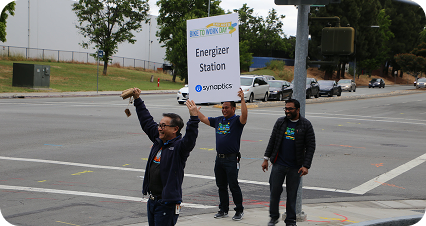
We are educating our employees on actions they can take to reduce their environmental footprint via an online employee learning portal as well as through unifying events such as Earth Day and the Annual Silicon Valley Bike to Work Day.

Supply Chain
We ensure our major suppliers are adopting environmental policies that reflect our shared values and together we regularly review these initiatives to reduce negative impact on the environment in the production of our products.
Read our Supplier Environmental
Conservation Program